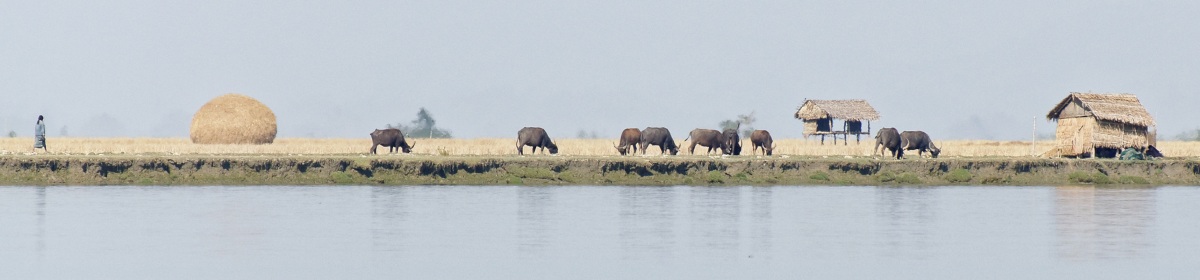
 Anne Frank was born on June 12, 1929 in Frankfurt am Main, Germany. Her unexpectedly discovered journal The Diary of Anne Frank is a testament to the endurance of the human spirit. In honor of her life I am reprinting my first post about Stolpersteine, the Stumbling Stones laid throughout the world to remember the lives of those killed by repressive regimes. – Jadi
***
She placed her unbandaged left hand over his on the table top. “Don’t think I’m only a cynic. If I lost my faith in nations, I find huge bravery and kindness in individuals. I kept my faith – and how can that be, after what religion did to my country? But I did. I believe in God. You saved my life so I am saved again. It’s more than a woman could hope for.” She squeezed his hand. “How long do you stay in Stuttgart?”
For the first time his regret about leaving had to do with a person and not with his phobia. “I should take a train tomorrow. Actually, I’m scared to fly,” Guy admitted. “I was in a forced landing once. I’m afraid of being in another.”
“Why fear a statistic chance? Why worry about an abstraction?” Nadia’s shoulders rose and fell in the Eastern European’s shrug, a slow, weary movement that expressed the futility of every question. “Think about the poor people who are in tsunamis. Or a war zone, where real fear is to think, how do you keep walking on the street as a rocket hits somewhere near, or you hear thwack!, and the person in front of you falls down? First you think, this time it isn’t me. It took years for me to stop looking over my shoulder. Stuttgart is civilized, but even here I stumble over Stolpersteine.”
“Over what?”
“Stolpersteine.”
Guy shook his head. “Never heard of it.”
“Them. Come, I will show you. There are some up around the corner.” Nadia refused to explain further.
She insisted on paying the bill and tucked her arm in his as the two of them headed up the Königstrasse. She led him to a stop in front of a store. “What do you see?”
Guy saw Europeans out Christmas shopping, happy people laughing and drinking glühwein, store windows filled with beautifully displayed consumer goods. Was it something special about the storefront? He shifted his weight and his heel came down on an uneven spot in the cement. When he glanced down, Guy saw gold cubes embedded in the sidewalk. He squatted to get a better look. Königstrasse 60, a stone with the name of Clothilde Mannheimer, another beside it for Jakob Mannheimer.
Nadia crouched down next to him. “The Mannheimers lived in this building. They were moved by train to Theresienstadt and died in the concentration camp there,” she translated. “These are their Stolpersteine, their stumbling stones. Wherever we go, we stumble over reminders of the past. The stones make sure we don’t forget the dead, these make sure that people today can’t push the dead from our memories.”
Guy traced the imprint of the names. The little golden cubes were weightier than their size. “Are there more?”
“All over Germany. Other countries, too. The Stolpersteine groups wish to mark the last free place where the persons lived, not where they were sent. Sometimes a family asks for a stumbling block; sometimes a local group did research for victims. And Stolpersteine are for everyone. Especially the Jews, but also the Behinderte, the ones with handicaps,” she corrected herself, “the mentally slow or physically handicapped. And gypsies, Communists. All were killed or did have to leave.”
“Knowing all this it wasn’t hard for you to become a German citizen?”
She gave another slow Eastern European shrug. “I gave up my old passport a decade ago. It was less hard than I expected. My home country is one in the heart.” – from the chapter What A Guy in Tsunami Cowboys, longlisted for the 2019 ScreenCraft Cinematic Book Award.

In memory of Anne Frank, 12 June 1929 – February or March 1945
NOTES: Text and Photos Copyright © 2015 Jadi Campbell. Previously published as Stolpersteine 1: Tsunami Cowboys’ Stumbling Stones. Uwe’s photography may be viewed at viewpics.de.
ere for my author page to learn more about me and purchase my books.


 And I go for walks, and practice self-care. I love to cook, so that’s more than all right. I can take my time with elaborate recipes. Great way to channel my restlessness. Uwe and I live together in lockdown harmoniously most of the time.










 Annie Edson Taylor was born on October 24, 1838 in Auburn, New York. On October 24, 1901, her 63rd birthday, she became the first person in history to go over Niagara Falls in a barrel and survive. Ms. Taylor hoped to secure her financial future with the stunt, but aside from some initial speaking engagements and a memoir she didn’t make much money. Her manager stole the barrel, and she had to use up her savings to hire private detectives to track him and the barrel down again. Annie died in Niagara County and her body is interred in the ‘Stunter’s Rest’ section of the Oakwood Cemetery in Niagara Falls on the New York side of the waters. In her honor I am reprinting a post I wrote after visiting the waterfalls of southern Laos. – Jadi
 On our last trip to Laos we headed south to the quiet little city of Pakse in the Chapasak province. We wanted to see old ruins – and really spectacular waterfalls!


 When the French colonized Laos they came up with a bold (and ultimately quixotic) plan to build a railway through the region. They wanted to go around the waterfalls and create a faster, easier way to travel and ship goods either to the north, or to the southern Vietnam port of Saigon. The result is what a CNN article wryly refered to as “Laos’ first railway: 14 km of rust” [2].
 But oh, those waterfalls on the Bolaven Plateau: we hiked in to as many as our young guide was willing to take us to. And we didn’t even need a barrel.











 And it’s the first half of the last post in this blog thread for Bobbo! I present the Grande Finale: Installment # 41! describing what to call groups of animals … See how many you can guess. Answers listed at the bottom of the page. Happy Easter, everyone. May the world be reborn.


