
We spent a couple weeks in Malaysia this spring. Most of that time we stayed in the classic tourist destinations: Georgetown and Melaka for their rich layers of Dutch, Portuguese, British history.


 We tried to see some of the incredible nature, too. My personal highlight was Sarawak on Borneo. We went to the UNESCO global geopark on Langkawi Island and took a bus inland to the tea country of the Cameron Highlands.
Everywhere we went, I was struck by two things. The first is that in a predominantly Muslim country it can take a while to find alcohol. Evening mealtimes for Uwe and me are when we want to linger over a glass and talk about what we saw during the day. In Malaysia we’d peruse the menu at the front of a restaurant and turn the pages to the very back where the drinks were listed. If it didn’t serve beer or wine, often we’d smile and say thank you, and head further down the street feeling slightly like jerks.

The second thing I noticed is that in every place we visited, streets in Malaysia contain the houses of worship of different religions. Muslim mosques, Christian churches, Hindu, Buddhist, Tin Hau and Chinese temples, one next to the other line a street. Everywhere.


 We explored many of them and I was delighted and calmed by the sweet atmosphere in these roads. The world feels more and more divided. But the Malaysians we talked with are proud of the religious tolerance and multicultural blend that makes up their country.


 And that’s a concept I’ll gladly raise a glass of wine to….
 NOTES: © Jadi Campbell 2019. All photos © Uwe Hartmann. To see more of Uwe’s pics from Malaysia and our trips go to viewpics.de.
Click here for my author page to learn more about me and purchase my books.
 We were at Semenggoh Nature Reserve, just south of Kuching in the Sarawak state on Borneo. Semenggoh is also a Wildlife Centre, established in 1975 as a rehabilitation sanctuary. They take in injured, orphaned, or rescued orangutans. The sole goal of the centre is the rehabilitation and gradual return of animals to fend for themselves in the wild.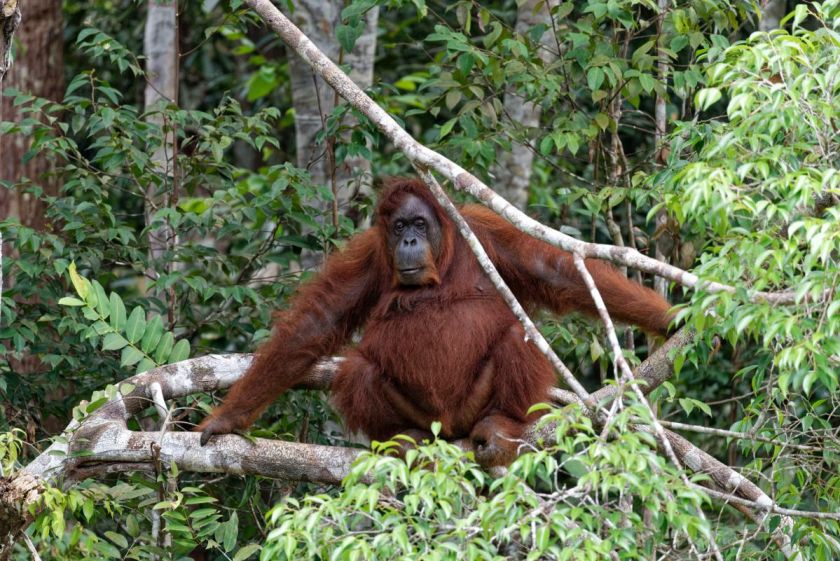

 NOTES: [1]
  NOTES: Text and photo © Jadi Campbell 2019. To see Uwe’s pics from our trips go to


 Ah, Kubah National Park on Borneo…. froggie paradise. The park is also home to other species. We met these guys.


 It was also very, very funny, at times like being in a Monty Python sketch. Overcast, humid as hell and still hot as hell, even in the middle of the night. I dripped sweat and my glasses kept fogging up. Pitch black darkness, except for our flashlights…. which the two guides and I were shining on the frogs so that Uwe could capture them in photos. He didn’t want to use the camera flash, not wanting to startle the wild life and because light from a camera flash is too artificial. So I took his flashlight and held a torch in each hand, aiming them as directed. It was as though he were a mad director with a camera crew. It didn’t bother the critters one bit – they went on singing, and croaking, and hanging out on bole branch and vine…


 NOTES: Many of these species can be found only on Borneo. If you missed it in Part One, go to this link to hear what serenaded us in the jungle:
  Ah, Kubah National Park on Borneo…. froggie paradise.
 March 2019 Journal entry:


 Jerry Ang, the soft-spoken shop owner, kindly answered all my questions. He told me these were Dayak shaman medicine containers. The figures are hand carved from polished buffalo or cow bone. A shaman had hand-etched the jar with scrimshaw patterns. Dayak shamans used the containers to store herbs, magic powders and betal lime to make medical potions. Some still contained resins – Jerry and I opened each jar and sniffed.
 NOTES: [1] Balian is the term used for traditional healers on Bali, too. Healing arts are passed down through generations. Twenty years ago I did a massage exchange with the son of a balian there; he had been taught by his father. To learn more about the Dayak shamans go to