Actress Elizabeth Taylor was born on February 27, 1932 in London, England. She was talented, beautiful and wildly glamorous. My favorite role of hers is Martha in the electrifying Who’s Afraid of Virginia Woolf, but Elizabeth Taylor is perhaps most identified with her role as Cleopatra. In her honor, here is a post I wrote after visiting Egypt and the Nile River. —Jadi
***
This is Part 2 to my post about our brief trip to Luxor, Egypt. As I look through Uwe’s photographs from that week I’m struck by his images of the Nile.
Cleopatra: He’s speaking now, Or murmuring ‘Where’s my serpent of old Nile?’ — Shakespeare Antony and Cleopatra, Act I, Scene 4

There is something sensuous about this river… One of my very favorite Shakespeare plays is Antony and Cleopatra. Here is the description of Cleopatra floating down the Nile:
Enobarbus: The barge she sat in, like a burnished throne,
Burned on the water; the poop was beaten gold,
Purple the sails, and so perfumed, that
The winds were love-sick with them, the oars were silver,
Which to the tune of flutes kept stroke, and made
The water which they beat to follow faster,
As amorous of their strokes.
…From the barge
A strange invisible perfume hits the sense
Of the adjacent wharfs. The city cast
Her people out upon her, and Antony,
Enthroned i’ the market-place, did sit alone,
Whistling to the air; which, but for vacancy,
Had gone to gaze on Cleopatra too
And made a gap in nature.
Agrippa: Rare Egyptian! (Act II, Scene 2)

The Nile is iconic. It’s the longest river in the world, around 4,160 miles or 6,670 kilometers The Nile originates at Lake Victoria and Lake Tana, and ends at the Mediterranean. It flows northward through Tanzania, Rwanda, Kenya, Uganda, Burundi, Ethiopia, Democratic Republic of the Congo, Sudan, South Sudan, and Egypt.

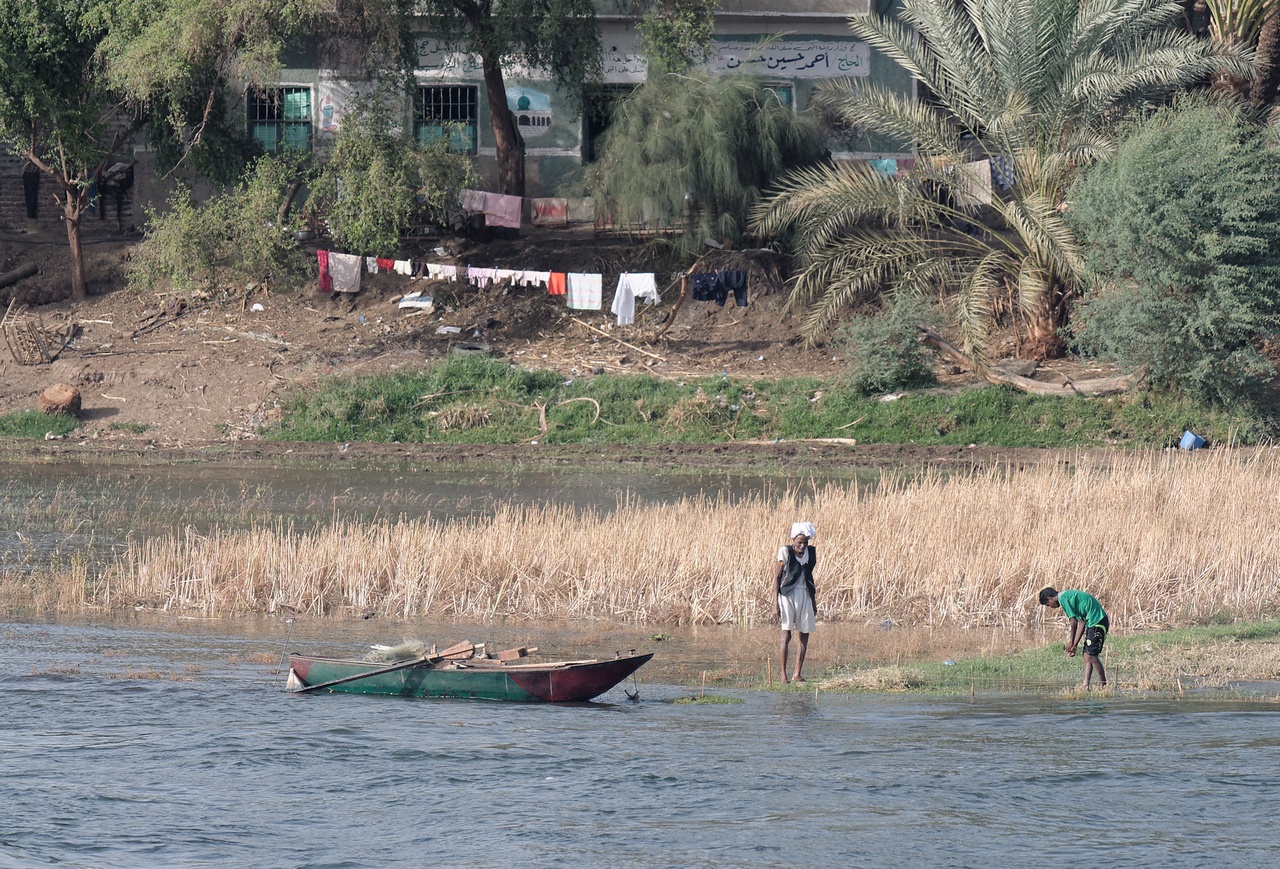
It is the largest oasis on the planet. When we visited in May 2013 tourism had declined so far that there were no longer any direct flights to Luxor. Instead, we flew to Hurghada on the Red Sea and a van met us. We drove for four hours across the barest desert landscape imaginable. No nomads, no towns, no vegetation or animal life to be seen. When we reached the Nile, visible signs of life appeared again.

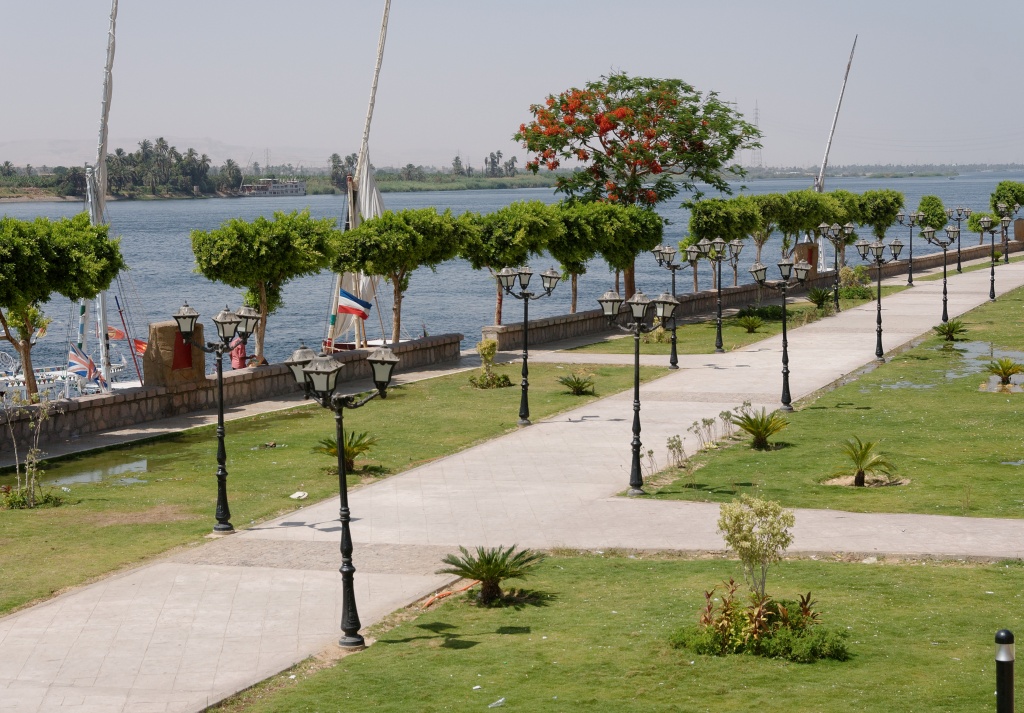

All of the great ancient cities we visited are on the river’s banks. Karnak, Luxor/Thebes. Dendera, Edfu. From our hotel balcony we gazed directly across the river to the Valley of the Kings. The Valleys of the Kings, the Queens and the Nobles are on the west bank of the Nile River as you must be buried on that side in order to enter the afterlife.

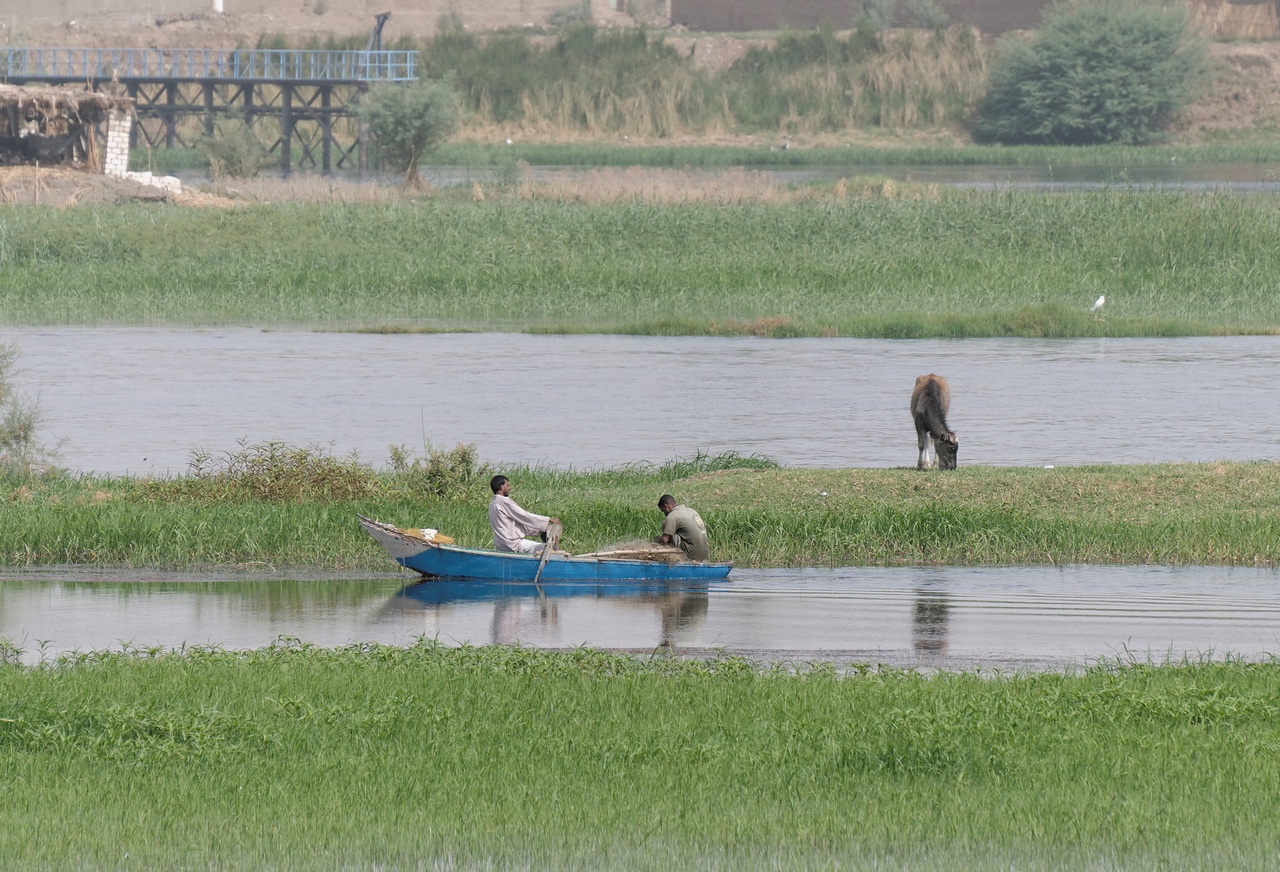
We sailed downriver to Dendera, enjoying the scenery that flowed slowly past.
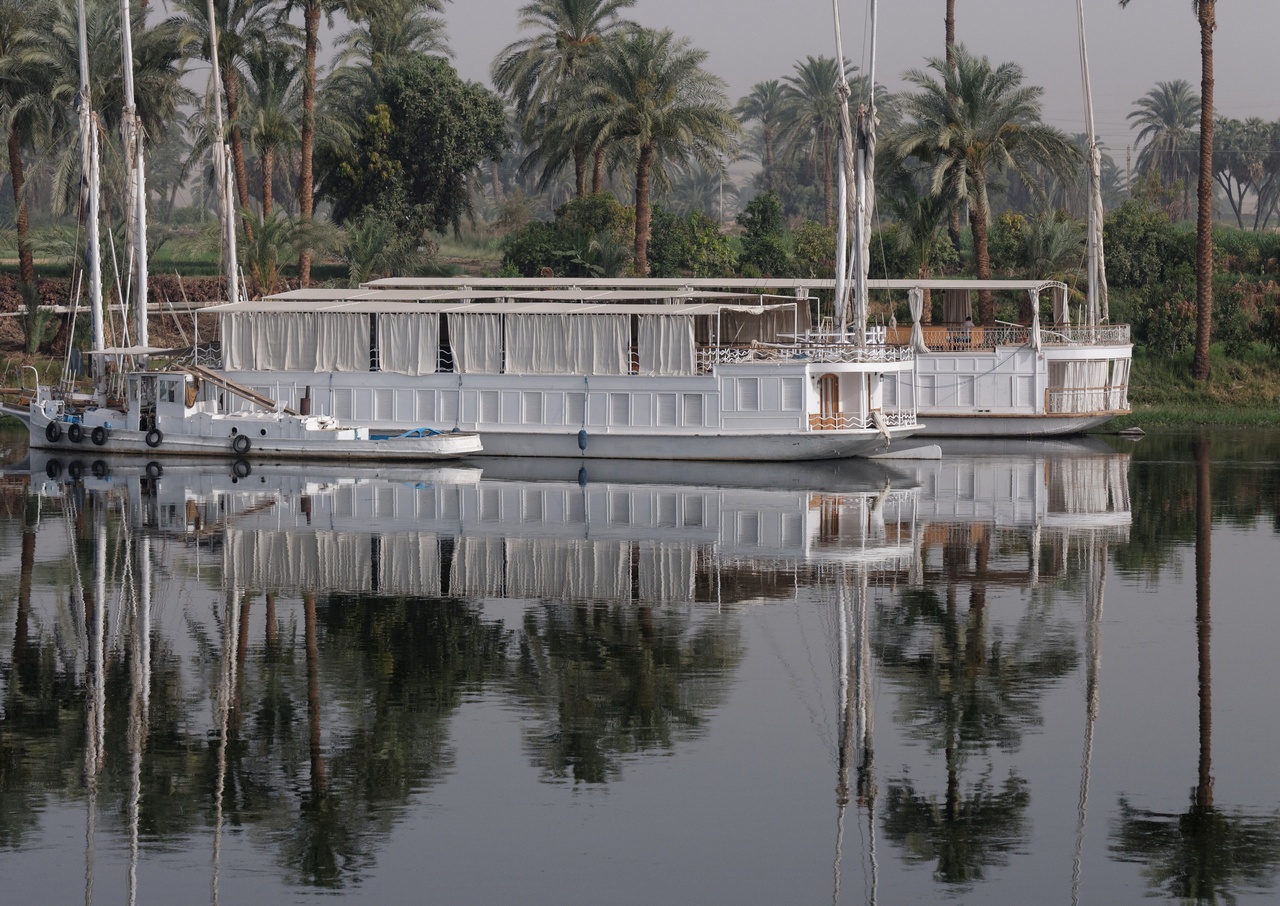

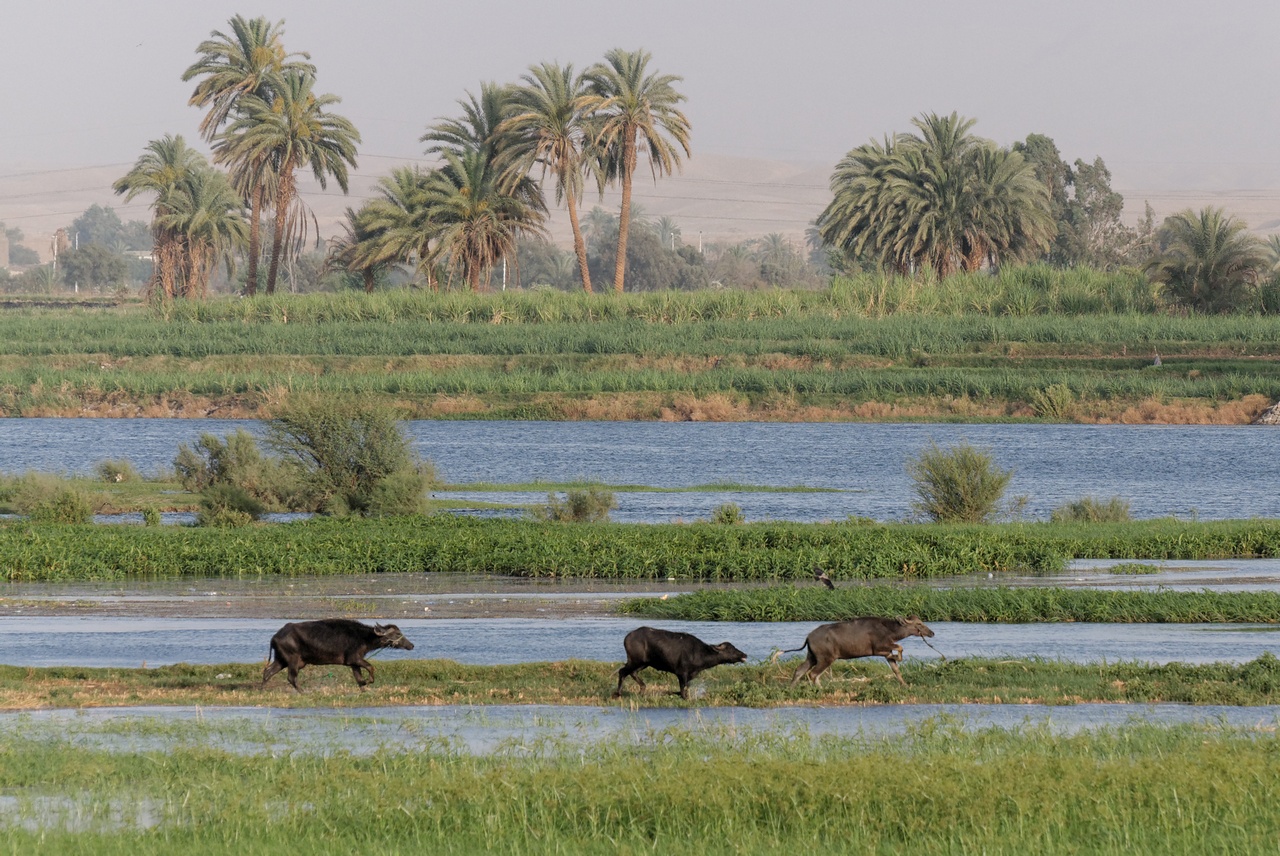
The fertile Nile was the original source of Egypt’s wealth and today 40 million Egyptians (50% of the population) live near its banks. There was life on the shores and in the water everywhere we looked.
Cleopatra: …we’ll to th’ river: there, My music playing far off, I will betray Tawny-finned fishes. (Act II, Scene 5)


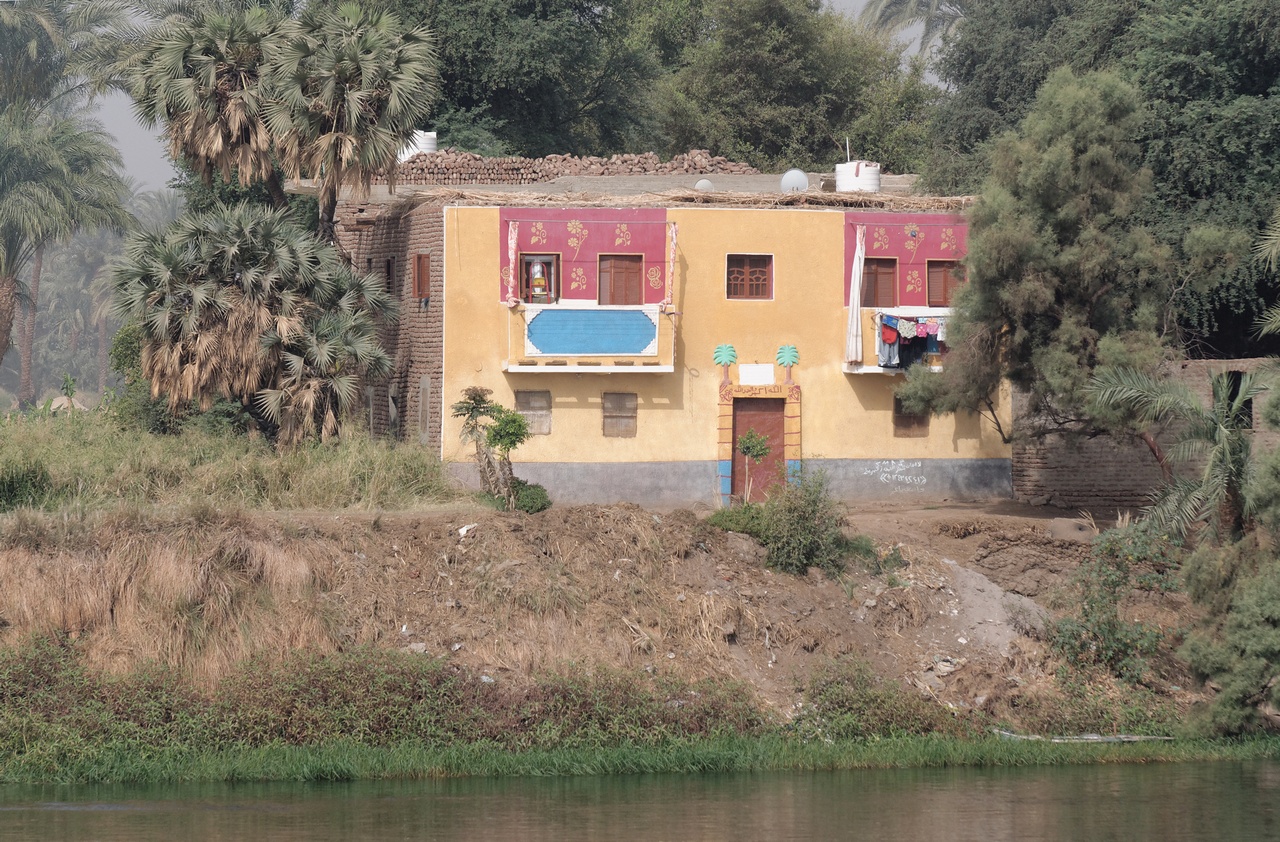
Antony: The higher Nilus swells, The more it promises; as it ebbs, the seedsman Upon the slime and ooze scatters his grain, And shortly comes to harvest. (Act II, Scene 7)
The Egyptian calendar was based on the Nile’s three flood cycles. According to Wikipedia, “[t]hese seasons, each consisting of four months of thirty days each, were called Akhet, Peret, and Shemu. Akhet, which means inundation, was the time of the year when the Nile flooded, leaving several layers of fertile soil behind, aiding in agricultural growth. Peret was the growing season, and Shemu, the last season, was the harvest season when there were no rains.” [1]
As I looked out at the river and thought about my mother, I sensed the rhythms of life and death more clearly than ever before.


To the ancients, the Nile was the River Ar meaning “black” because of the rich, fertile sediment left on the banks from the Nile’s flooding. When the Aswan Dam was built in 1970, the annual flooding ended. But by the time we left I knew why Shakespeare’s hero confessed,
Antony: Egypt, thou knew’st too well My heart was to thy rudder tied by th’ strings, And thou shouldst tow me after. (Act III, Scene 9)
In memory of Elizabeth Taylor, February 27, 1932 – March 23, 2011
NOTES:[1] Season of the Harvest, Nile-River-Facts, Ancient Egypt Online, www.sciencekids. Copyright © 2015 Jadi Campbell. Previously published as Egypt 2: Along the Nile. More of Uwe’s pictures from Egypt and his photography may be viewed at viewpics.de.
My books are Broken In: A Novel in Stories, Tsunami Cowboys, The Trail Back Out and Grounded.
Click here for my author page to learn more about me and purchase my books.


 It’s an easy bus ride from the capitol Riga to the museum. Go to my post

 Existence was harsh and hard, like the overcast skies much of the day we visited. [2] Along with simple huts, the site includes windmills.
 A store building is filled with dowry chests and traces of Latvia’s long history serving in the Hanseatic League.


 The town to see whales is Hermanus. We walked from our hotel to the jetty where we’d catch a whale watching boat. The scenery included local art.






 The garter snake is Massachusetts’ official state snake, and is endemic to most of North America. It’s the most common snake species, and closely related to water snakes, the genus Nerodia.
 I find snakes fascinating. [2] Sacred snakes were used by the Oracle at Delphi and in ancient Minos. Recall the cobra, who spread its hood to shelter the Buddha. St. Patrick supposedly drove the snakes out of Ireland. [3] On a practical level, the garter snakes in Barb and Javier’s yard will eliminate any pest threat from rodents. (They also eat snails and slugs, common garden problems in the wet Northwest.)
 As I admire the yard and go look from time to time for the two snakes I’ve seen in different parts of the garden, I think mostly about the fact that the presence of snakes means the small biosphere of my sister’s home is a healthy one. It’s not a coincidence that garter snakes are often referred to as ‘garden snakes’.