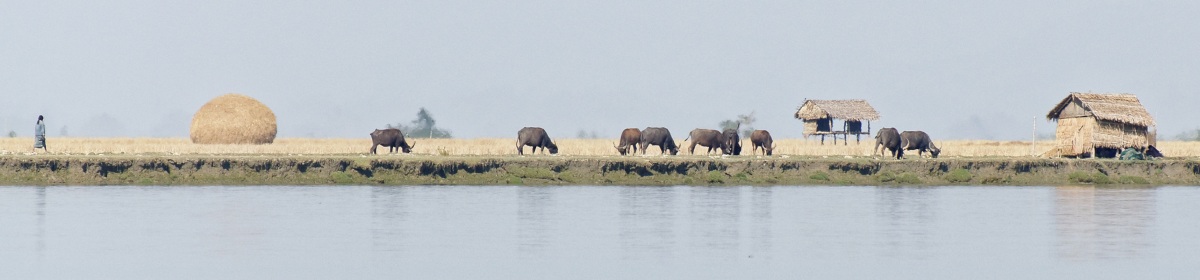
Artist Paul Klee was born on December 18, 1879 in Münchenbuchsee, Switzerland. He was a part of the Bauhaus movement and wrote about color theory. Klee traveled to Tunis in April of 1914 for twelve days. The colors and light of North Africa strongly influenced his paintings and those of his companions August Macke and Louis Moilliet. In his honor I am reprinting the post I wrote after we visited Tunisia. – Jadi
We flew down to Tunisia for a week in September that year. I’d planned to write about Hammamet’s lovely laid back tourist vibe, the gorgeous beaches and how much fun it was viewing the Mediterranean from the Africa coast for the first time.
I didn’t want to obsess on the fact that a few weeks later terrorists shot tourists in a museum down the road from the souk we visited. I definitely don’t want to think about the beach where tourists from around the world were murdered in cold blood that summer. It’s less than 30 kilometers (20 miles) from the hotel we stayed in.

Those cowardly acts have nothing to do with what Uwe and I experienced. I took notes as I sat on our sweet balcony, and here is what I wrote:
“The tourists are international. Every body size and shape, every age is represented. We see groups of Italians, French, Egyptians, Algerians, Germans and Brits. Women in black leggings, head scarves, and long sleeved tunics sit by the pool. Two men (young Arab males) hold hands and spring into the pool at a running jump. Kids run and play everywhere I look. Old folks in wheel chairs are pushed by family members.
The French and Italian tourists live up to their reputations with their rule of remaining poolside until 6 p.m. Then they go to change for dinner at 7:00.

Lots of Middle East tourists are traditionally dressed in modest clothing. [1] They swim in the ocean fully dressed! But there are also single Arab women in bikinis, or young couples on holiday.”

“Paragliders are pulled by boats, a yacht and sailboat or two glide by, an endless panorama of ocean spreads from left to right. Without talking about it we head past the pool to go down to the lounge chairs under sun umbrellas on the beach. Uwe reads and I edit the manuscript for my second book Tsunami Cowboys. I’m beyond happy: I’m in an exotic locale with fun stuff to notice all around me and I’m doing good writing work. Each afternoon around 4 I stop and swim in the ocean.”
Our hotel was about twenty minutes from the center of Hammamet. Sometimes we strolled into town for dinner; some nights we had a drink at the hotel and picked one of the restaurants there. We did a couple of tours, to Tunis, Sidi Bou Saïd

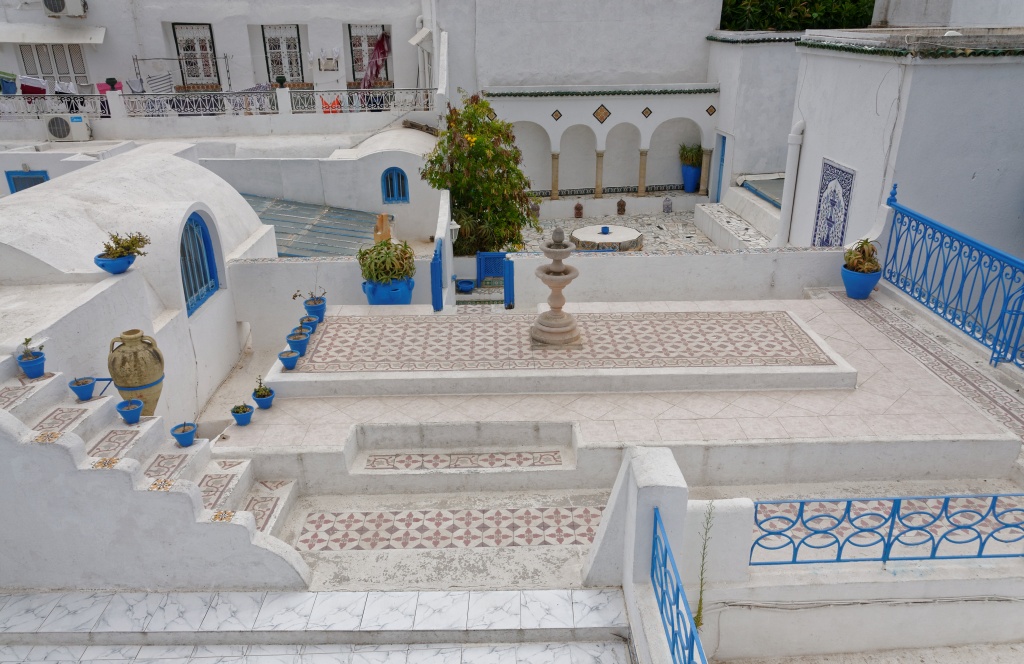
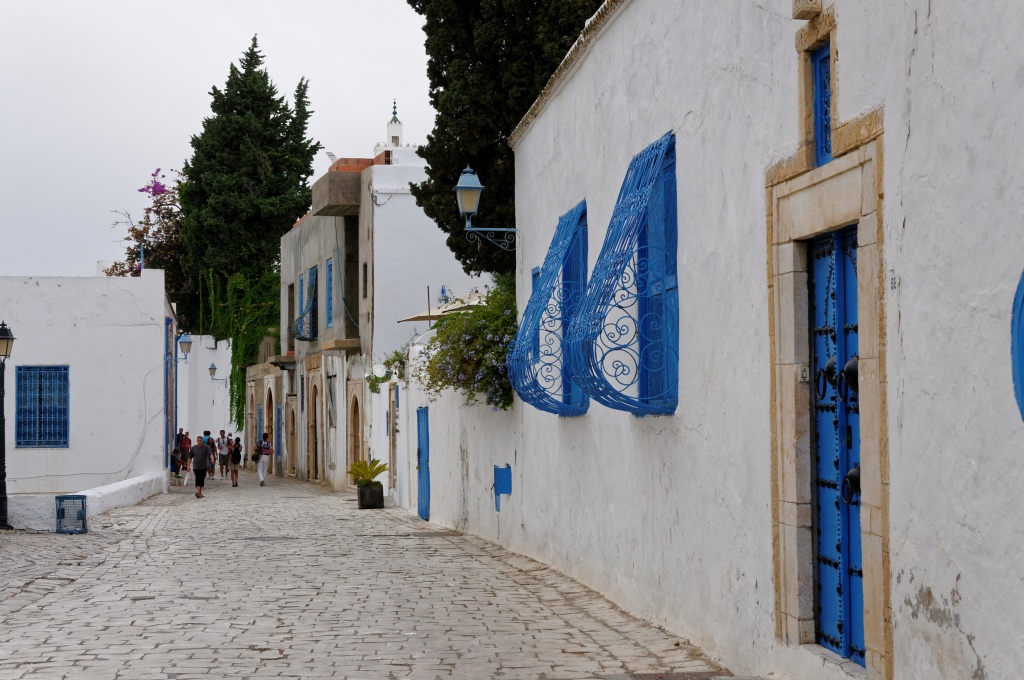


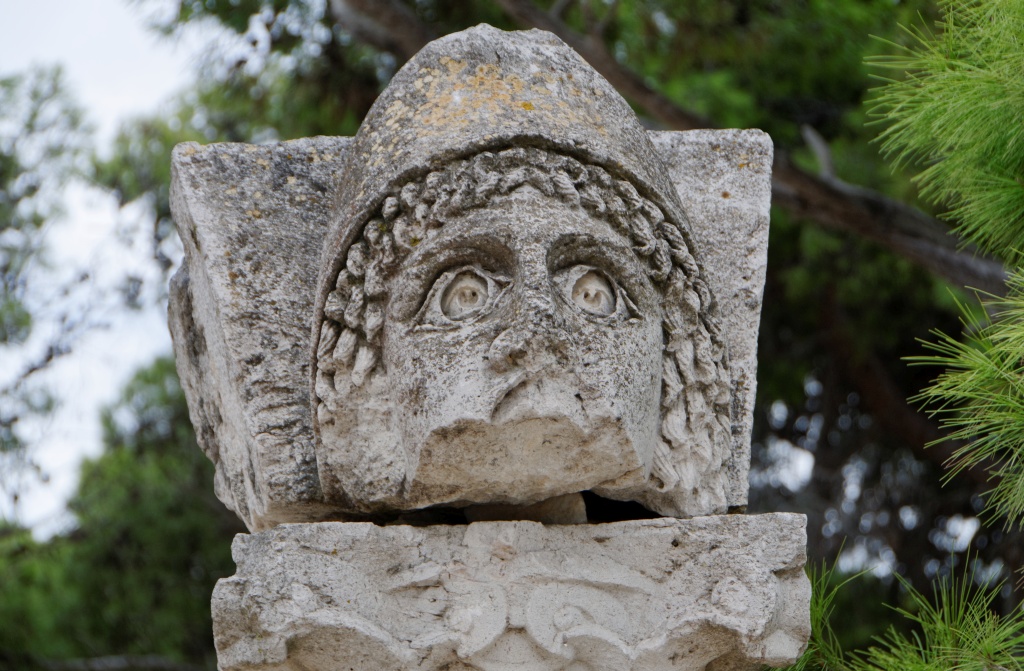
and the ancient city of Carthage. [2]
I bargained for sandals at Tunis’ souk [3],
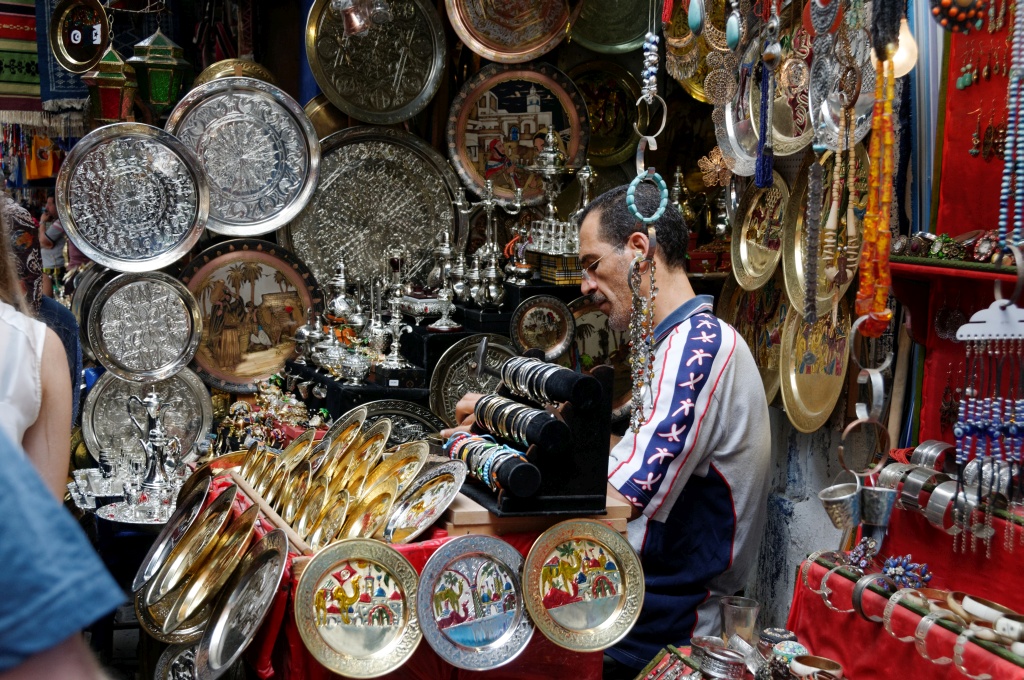
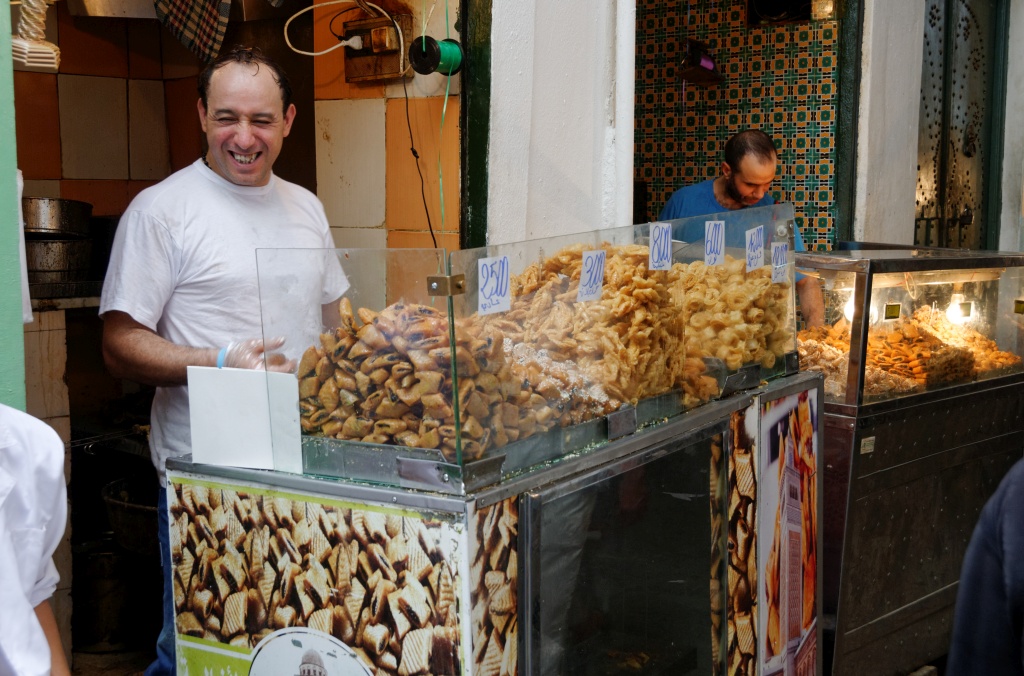

and harissa and couscous spices at an outdoor market.
Touristy? Sure. But here are more of my notes from that week: “Everyone smiles and says hello in the hotel. We’re all here to relax and co-mingle. I have the lovely experience of being welcomed as an American – and when was the last time that’s happened lately – the locals intrigued to learn where I’m from, and even more intrigued to hear that I live in Europe.
I think that’s partly because not many Americans make it to the area, or maybe our hotel books more Europeans and Arabs. Certainly on our charter flight from Germany I’m the only Ami on board! Tunisians are delighted when I assure them that yes, I am enjoying my first visit to their country.”
We learn that Tunisia’s population of 8 million swelled by an additional 2 million people displaced by wars. Tunisia is a struggling democracy in an unstable part of the world. The Tunisians on the coast are hospitable, curious, worldly. And I want to go back.
I want Tunisia without terrorism.
In memory of Paul Klee, 18 December 1879 – 29 June 1940
NOTES: [1] A sign by the pool read “Clothes clog the drains! Bathing suits only, please!” [2] Carthage made the fatal mistake of challenging Rome. The Romans burned it to the ground, killed all the men and sold the women and children into slavery. Then, to make sure everyone got the message that it was a really bad idea to go against Rome, they sowed the area with salt so that nothing would ever grow again…. [3] The shopkeeper held a lighter to the bottom to prove that they were made of camel and not plastic. ©2016 Jadi Campbell. Previously published as Tunisia Without Terrorism. Photos © 2015 Uwe Hartmann. More of Uwe’s images from our trips to North Africa and his photography may be viewed at viewpics.de.

Click here for my author page to learn more about me and purchase my books.


 Author and journalist Mark Kurlansky was born December 7, 1948 in Hartford, Connecticut. He has written about oysters, cod, salt, salmon, milk and paper – among other topics. His writing is engaging and informative. I have copies of Cod: A Biography of the Fish That Changed the World (an international bestseller translated into more than 15 languages) and Salt: A World History. His book





 I am honored, awed, and humbled that my short story anthology just received its third distinction. I was notified that The Trail Back Out was selected as a Finalist for the 2021 IAN Book of the Year Award (Short Story Collection) by the Independent Author Network. Go to this link for the finalists and winners:

 I’ve been going for long walks on the trails in the woods and orchards here, trying to absorb the news. The Trail Back Out is available for purchase and download.


 But I recall with glee the Peking duck Uwe and I ate in Beijing. The restaurant specialized in only Peking duck, along with all the pomp and circumstance such a dish demands.
 Our Chinese friend Weiyu orders for us, but every single table wants the same meal. Waiters are formally dressed, complete with chefs’ toques, mouth masks and protective gloves. By the end of the evening they carve hundreds of plates of duck.


 May November 11th bring you flights of fancy and a visit from the Bluebird of Happiness. By now the ducks and geese, indeed, all migrating birds have already left for warmer climates. Winter is coming.

 Annie Edson Taylor was born on October 24, 1838 in Auburn, New York. On October 24, 1901, her 63rd birthday, she became the first person in history to go over Niagara Falls in a barrel and survive. Ms. Taylor hoped to secure her financial future with the stunt, but aside from some initial speaking engagements and a memoir she didn’t make much money. Her manager stole the barrel, and she had to use up her savings to hire private detectives to track him and the barrel down again. Annie died in Niagara County and her body is interred in the ‘Stunter’s Rest’ section of the Oakwood Cemetery in Niagara Falls on the New York side of the waters. In her honor I am reprinting a post I wrote after visiting the waterfalls of southern Laos. – Jadi
 On our last trip to Laos we headed south to the quiet little city of Pakse in the Chapasak province. We wanted to see old ruins – and really spectacular waterfalls!


 When the French colonized Laos they came up with a bold (and ultimately quixotic) plan to build a railway through the region. They wanted to go around the waterfalls and create a faster, easier way to travel and ship goods either to the north, or to the southern Vietnam port of Saigon. The result is what a CNN article wryly refered to as “Laos’ first railway: 14 km of rust” [2].
 But oh, those waterfalls on the Bolaven Plateau: we hiked in to as many as our young guide was willing to take us to. And we didn’t even need a barrel.
