MERRY CHRISTMAS !!
Here’s the annual round-up of my blog offerings. I grew insanely prolific this year, and went from biweekly posts to once a week. Happy Holidays and we’ll meet again in 2018. —Jadi
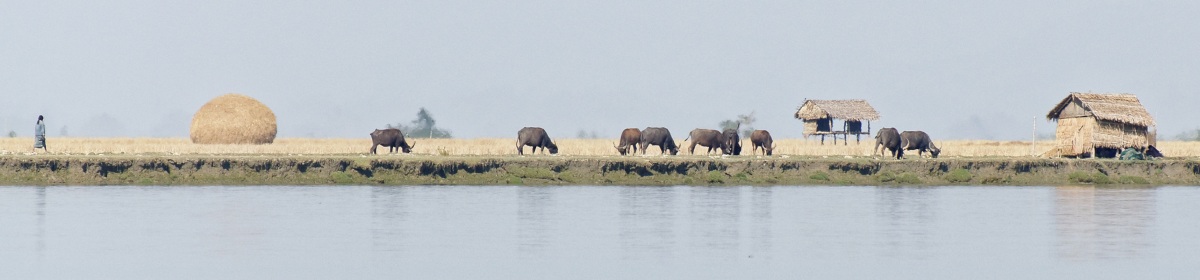
Art: Burma took center stage with A Burmese Spirit Guide and Sand Paintings. Food as Art was a tasty diversion. Andalusia was featured in Granada Heights, Alhambra Walls & Water, and Cordoba’s Arches. And we always have Paris! J’aime la Vie
Book excerpt: From my first book Broken In: A Novel in Stories, about a little boy and other people’s belongings. Carl Possessed 1 & 2
Current Events: I opined (quietly) concerning the mood in America, hurricanes, and the refugee crisis with Flags and Houston, We Have a Problem
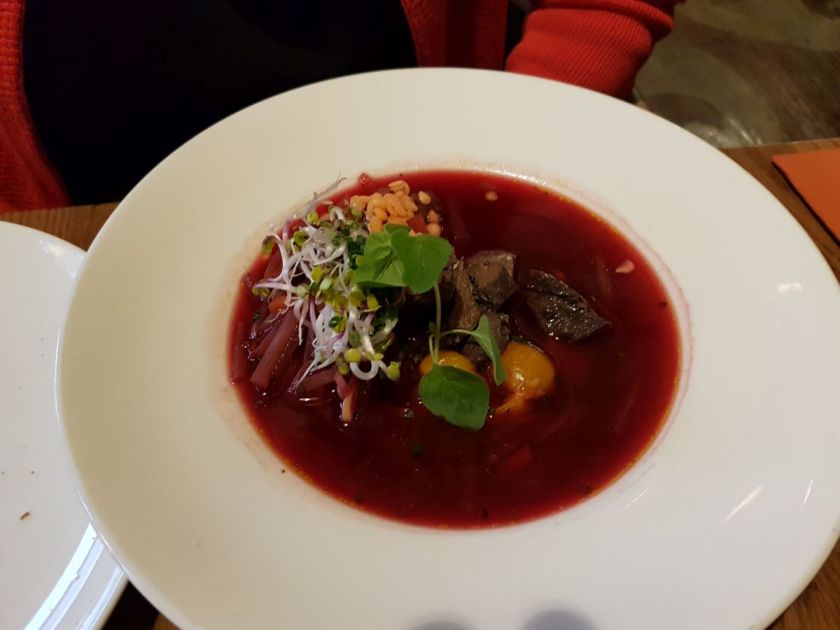
Food: Always a fun subject…. A Cornucopia, The Seeds of Summer, Food as Art, and the local specialties here in Christmas Markets, Flammkuchen, and The Seeds of Summer
History & Cultural Heritage: Flags, In Search of Inspiration, J’aime la Vie, Christmas Markets and Death by Yawning
Holidays: Halloween, Japan’s Jidai Matsuri, plus Germany’s Christmas Markets
Memory: A tricky topic involving both emotions and events. I explored memory in The Seeds of Summer, Going Home (this one resonated deeply with readers), Granada Heights, Alhambra Walls & Water, Cordoba’s Arches, and Sevilla Song and Dance
Music: The sound of castanets and flamenco guitar in Sevilla Song and Dance
Nature: I went nuts writing a thread dedicated to my father. It began with The Animal Kingdom: 1 and so far 19 (!) posts have gone live. Since that wasn’t enough for me, I wrote special posts concentrating on individual critter families, such as A Clowder, A Cluster, A Cornucopia, and A Brood. I wrote a post on natural disasters, too: Houston, We Have a Problem
Places: America, Andalusia, Burma, Estonia, Germany, Japan, Latvia, Paris…
Religion: I was lucky to revisit a glorious spot where Christianity and Islam coexisted in Granada Heights, Alhambra Walls & Water, and Cordoba’s Arches
Writing: A goodly dose of humor helps on those baaad days… In Your Shoes or In Search of Inspiration
Take a look around and see if you find old friends or stumble upon posts you may have missed. I like to think that these blog posts are my gifts to the world. As always, I welcome any and all feedback. See you next year!
NOTES: © Jadi Campbell 2017. To see Uwe’s animal photos and pics from our trips, go to viewpics.de
Click here for my author page to learn more about my books and me.


 We began our trip to southern Spain in Granada. When I stood inside Granada’s Cathedral, I suddenly – and very vividly – remembered what and how I’d seen it 40 years earlier. At the Alhambra, my memories were blurry remembrances of running water.


 This hypostyle hall (meaning that the roof rests on pillars) contains a grand 856 columns of finest jasper, marble, onyx and granite. These columns are topped with the arches, which are futher topped with more arches.


 What would I say if you were to ask me to select one thing I remember most after my first visit to the Mezquita as a teenager, all those years ago? I’d say: A sense of wonder.


 Artwork both secular and sacred is woven into every stroke of calligraphy that embellishes gorgeous walls and doorways and niches at both the Alhambra and in Córdoba. The effect is one of standing in a house of mirrors or an echo chamber with lights and patterns extending on and out into Forever.
 No single detail stayed. Just… a fleeting glimpse of the Divine.

 NOTES:
  I just made a second trip to southern Spain. It had been over forty years between visits, and I had no idea what – if anything – I might remember. My first trip was with my high school Spanish Club. We were all young, and boy were we excited to be able to drink legally for a change!
 I can remember loving the symmetry. I sure don’t remember any specific part of it. As I say, my memories are a blurry recollection of warm stone walls with ingenious decorations. Just… an impression of a harmony that contains a hundred thousand details you will get lost in once you begin examining the space more closely.


 Water, water, everywhere…. The former Islamic rulers built a sophisticated system of fountains and pools. Those fountains were designed to include the sound of flowing waters, and flowers and fruit trees were planted to delight the senses with their perfumes.


 On my first visit to Bagan I discovered artists had covered a temple’s altar with bags of colored sands. The artists brought them as offerings to Buddha. When I returned to Bagan this past spring, I didn’t find that temple again. But I remain delighted to know that it exists.


 It’s an easy bus ride from the capitol Riga to the museum. (Go to my recent post Food as Art and salivate over the delicious foods you can order in Baltic restaurants.)

 Existence was harsh and hard, like the overcast skies much of the day we visited. [4] Along with simple huts, the site includes windmills.
 A store building is filled with dowry chests and traces of Latvia’s long history serving in the Hanseatic League.

 NOTES: [1]