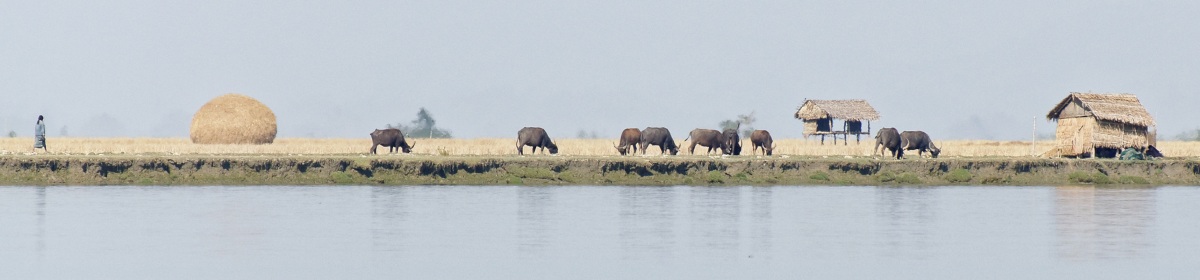
I present installment #11 from my blog thread describing what to call groups of animals … I updated it and the roll call of endangered species has grown. See how many you can guess. Answers listed at the bottom of the page.
A walk walks very, very slowly.
When this parade parades by, you can’t miss it.
The building builds on the built building.
The skulk skulks to avoid hunters.
The clutter cluttered the basement.
He didn’t want a kettle in his kettle.
Parade member, Sahakari Spice Farm Goa, India
Answers:
Walk race, Cook Islands
Walk of snails [1]
Parade of elephants [2]
Building of rooks [3]
Skulk of foxes [4]
Clutter of spiders [5]
Kettle of vultures [6]
Clutter, Japan
I’m beyond dismayed – I am furious. The Trump administration is gutting environmental protections. Take action. Speak up! Write letters, make phone calls, donate to organizations like the Environmental Defense Fund and Greenpeace. Volunteer.
I am a Best American Essays-nominated writer. My books are Broken In: A Novel in Stories, Tsunami Cowboys, Grounded, The Trail Back Out, and The Taste of Your Name. Recent awards include Finalist for the 2025 Compass Press Book Award for The Taste of Your Name and Finalist for Greece’s Eyelands 11th International Short Story Contest.
NOTE: The Jidai Matsuri, or Festival of Ages is held every year on 22 October, the date Japan’s ancient capitol of Kyoto was founded. Here is an earlier post from when we attended the festival and parade. — Jadi
Uwe and I visited both China and Japan on a trip. We were startled when Japan felt much more foreign than China. For a First World country, Japan is opaque and surprisingly difficult to grasp.
Huh?
We made sure we had plenty of time in Kyoto, traditionally Japan’s cultural heart.* Tokyo is modern and young and moves swiftly. Ancient Kyoto also seemed to have an older population, although the Kyoto train station was by far the most wonderfully futuristic we’ve ever visited. Our autumn visit coincided with the Jidai Matsuri, or Festival of Ages, held every year on October 22nd.
For a millennium Kyoto was the country’s capitol. In 1868 the emperor moved his imperial court to Tokyo. The Kyoto Prefecture was afraid that Kyoto’s thousand years of history would fade from memory. To make sure this didn’t happen they built the Heian Shrine to house the spirit of Emperor Kammu, who founded Kyoto in 794. The Jidai Gyoretsu, a parade for the Jidai Matsuri, was first staged in 1895.
Chairs are set up along the parade route and reserved well in advance. The parade started at noon at the Imperial Palace. We positioned ourselves on the grass 4.5 kilometers away, not far from the giant red torii gates of the Heian Shrine where the parade would end.
The parade commemorates the continuous ages of Kyoto history with truly spectacular costumes and objects. It begins with participants dressed in the styles of the Meiji Era (1868-1912) and then goes back in time to the Heian Era (794-1185). Musicians and buskers, riders on horse back and flag carriers all march.
The outfits are accurate from the samurai warriors’ headdresses and armor down to the last dot of face make up. Every detail has been researched.** Over 2,000 people take part in the parade.
The procession lasted for hours and Uwe took hundreds of photographs. Occasionally I made a run for bottles of water and snacks. We fell in love with onigiri, an ingenious salmon and rice treat wrapped in seaweed. It comes in a deceptively simple looking package that holds all of the ingredients separate until you open it.
I’ll need a separate post to talk about the shrines and temples we visited and the geishas we saw. Or to describe the cloths and scarves I bought, each with its special weaving technique and materials. Or the lacquerware bowls I fell in love with, first developed by monks as the perfect receptacle for rice…
NOTES: *Kyoto contains 17 World Heritage sites and is a UNESCO World Heritage City. **The methods used to make the costumes are traditional, too.
I present installment #11 from my blog thread describing what to call groups of animals … See how many you can guess. Answers listed at the bottom of the page.
The Oregon Country Fair is so much fun. This time I’ll let the pictures give you this post. My sister Barb has had a ceramics booth at the fair for over 20 years. At some point everyone walks by the booth.
Fair goers come to get out of their usual habits (and on this weekend, that word includes the definition of clothes).
Proportions seem odd.
Bands march on by.
So does magic.
For strange and wonderful creativity, come to the fair!